Case Study / Research
Multigenerational Workforce Learning Strategy
Overview
This project grew out of my doctoral research on social-emotional learning in a multigenerational workforce. I studied how employees across generations experience communication, feedback, and workplace learning. The goal was simple. Understand what people actually need, then turn that into better learning strategy.
The Need
Organizations often talk about generations in ways that flatten people into stereotypes. That creates confusion, weakens trust, and makes training less effective. I wanted to look past the clichés and focus on what helps people learn and work well together.
The Research
I used a qualitative multi-case design and interviewed 20 participants across four generations. I analyzed the interviews for patterns in communication, learning preferences, and social-emotional needs at work.
Key Findings
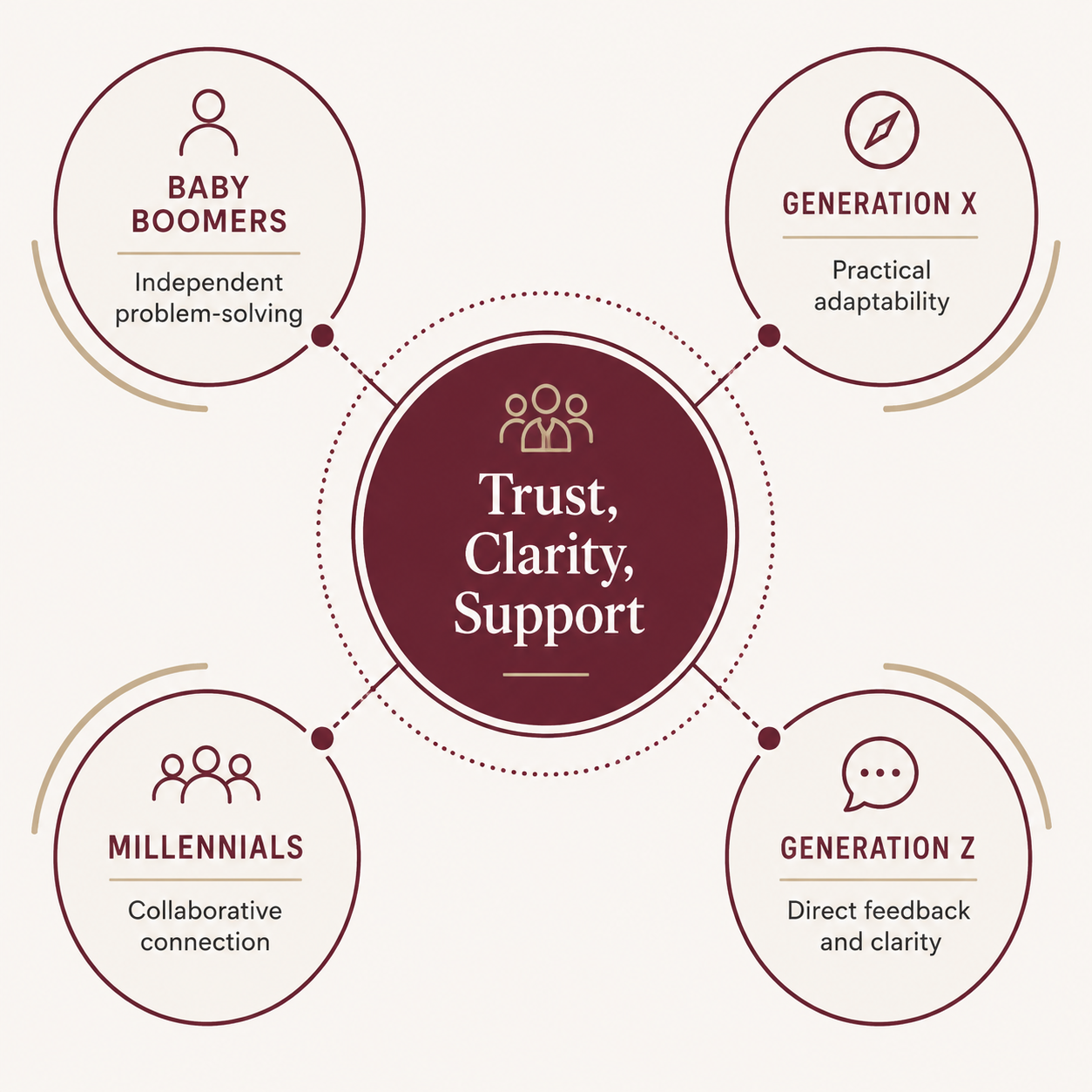
Each generation brought a different lens to work and learning. Baby Boomers often emphasized independent problem-solving. Generation X leaned toward practical adaptability. Millennials valued collaborative connection. Generation Z wanted direct feedback and clarity.
Across every group, one theme stayed consistent. People wanted trust, clarity, and support.
Why It Matters
This research shows that effective workplace learning is not about designing for stereotypes. It is about designing for people. When organizations build training that supports communication, trust, and feedback, they create stronger learning cultures across generations.
What This Demonstrates
This project reflects my work in research, learning strategy, adult learning, and organizational development. It also shows how I translate findings into practical recommendations that can improve training and workplace experience.